Agar
What agar does in skincare, how this seaweed-derived carbohydrate thickens and gels formulas, and what it means for skin.
Extremely safeIn 5 products we cover
We may earn a commission when you buy through links on this page. It never changes what we recommend.
Quick facts
- INCI name
- Agar
- Origin
- Plant-derived
- Chemical class
- Red-algae polysaccharide
- What it does in a formula
- viscosity controlling, gelling, binding
- Why it is in the formula
- Agar thickens or gels a water-based product and helps create its intended texture.
What it is
Extracted from certain red algae, agar is a carbohydrate polysaccharide often called agar-agar that forms gels in water-based formulas. In skincare products, it helps thicken liquids and provides a smooth, jelly-like consistency. It is not an active acid or a plant seed oil. Cosmetic agar belongs to the same familiar material family as food-grade agar, but it can differ in its processing and formulation use.
Agar’s job is mainly structural. It helps control how a product flows, holds together, or spreads from its container. It does not tell you whether a gel will hydrate skin, because that depends on humectants, emollients, and the full formula. An agar-containing serum might feel light, while another product using the same gelling ingredient could feel quite different.
What it does
- Thickens water-based formulas. Agar can help a watery blend become a gel or thicker liquid.
- Stabilizes texture. It contributes structure so a product stays more uniform in the package.
- Changes application feel. The gel network can help a product spread smoothly and feel less runny.
Who it suits
Agar is not a targeted active for a specific skin type. You may see it in gels or other products where texture matters, but its presence does not mean the formula will be more hydrating or soothing. If you like lightweight gels, judge the product by its finished feel rather than assuming agar guarantees a particular result.
Agar is derived from algae, but a botanical origin does not make every product suitable for every person. The complete ingredient list may include preservatives, fragrance, or other materials that affect comfort. If you react to a product, consider the whole formula. Stop using it if irritation persists, and consult a dermatologist if you need help identifying a repeated trigger.
What to pair it with, and what not to
No special pairing is needed. Humectants and emollients provide much of a gel’s moisture and softness.
Skin Realist check: A gel that holds its shape is a small pleasure. It does not need to be a life-changing event.
Quick picks with Agar
Scent-free, no patch-test flags on the label
COSRX 5 PDRN Hyaluronic Acid Vital Hydrating Hydrogel Mask
PDRN · scent-free label
Amazon

All 5 products with Agar
Sheet, Hydrogel & Clay Masks (3)


Hydrating Serums, Essences & Ampoules (1)

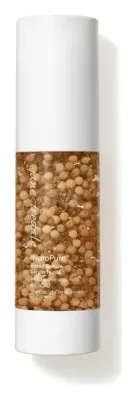
Full-Coverage Camouflage & Liquid Foundations (1)
Common questions
What does agar do in skincare?
Agar is a polysaccharide used to thicken or gel water-based formulas. Its main contribution is the product's texture, not a direct skin treatment.
Where does agar come from?
Agar is extracted from certain red algae. It is a carbohydrate material rather than a land-plant oil or animal-derived gel.
Is agar the same as agar-agar?
Agar and agar-agar are common names for the same seaweed-derived gelling material. Cosmetic labels may use the INCI name agar.
Does agar hydrate skin?
Agar helps form the gel structure of a product, but it is not usually the main humectant. The rest of the formula determines how moisturizing the finished product feels.