Alternatives by ingredients and purpose
Looking for a substitute? Start with what you want the product to do, then compare the differences you would actually notice or avoid. These are not proven dupes.
Why we do not give an ingredient-match percentage
Shared ingredients do not establish equivalent concentrations, delivery, texture, stability, tolerance or results. We show exact shared recorded base names, excluding water and optional colorants. Synonyms are only merged by our explicit ingredient corrections; different derivatives stay different. Incomplete lists can undercount overlap, never establish absence.
No price or savings claim is made before current permitted price data is available. Pairs are selected for practical purpose, not measured search demand or commission.
We may earn a commission from Amazon links. Check the exact product and size before buying.
Retinol creams for visible lines and texture
Choose the 0.1 Cream if your priority is the lower declared retinol concentration. Compare the 0.3 Cream only if you specifically want a higher declared strength and already tolerate retinol. Both are creams with panthenol and shea butter; neither percentage guarantees results or freedom from irritation.
Important limit: Same retinol form, different stated strengths. More retinol is not proof of better results or a reason to increase strength.
Shared recorded base ingredient names (49, excluding water)
Presence only, not equal amounts or effects. Optional names do not count.
- Caprylic/Capric Triglyceride
- Propanediol
- Glycerin
- Tocopheryl Acetate
- Cetearyl Alcohol
- Trehalose
- Panthenol
- Butyrospermum Parkii (Shea) Butter
- Glycine Soja (Soybean) Oil
- Ammonium Acryloyldimethyltaurate/VP Copolymer
- Dimethicone
- Glyceryl Polymethacrylate
- Helianthus Annuus (Sunflower) Seed Oil
- Polyglyceryl-10 Stearate
- Hydrogenated Lecithin
- Hydroxyethyl Acrylate/Sodium Acryloyldimethyl Taurate Copolymer
- Carbomer
- Tromethamine
- Glyceryl Stearate
- Polysilicone-11
- Sodium Sulfite
- Tocopherol
- Daucus Carota Sativa (Carrot) Root Extract
- Retinol
- Allantoin
- Glyceryl Caprylate
- Oryza Sativa (Rice) Bran Wax
- Tocotrienols
- Stearic Acid
- Polyglyceryl-3 Methylglucose Distearate
- Palmitic Acid
- Disodium EDTA
- Ethylhexylglycerin
- Adenosine
- Sorbitan Isostearate
- Elaeis Guineensis (Palm) Oil
- Beta-Carotene
- Myristic Acid
- Lauric Acid
- Ascorbic Acid
- Limnanthes Alba (Meadowfoam) Seed Oil
- 3-O-Ethyl Ascorbic Acid
- Glutathione
- Sodium Hyaluronate
- 1,2-Hexanediol
- Hydrolyzed Hyaluronic Acid
- Sodium Hyaluronate Crosspolymer
- Hyaluronic Acid
- Sodium Acetylated Hyaluronate
Consider this when
- You are comparing first-time retinol options and want the lower stated strength
- You are prepared to start gradually rather than apply it more often to speed up results

Consider this when
- You already tolerate retinol and have a reason to compare a higher stated concentration
- You understand that more retinol can mean more irritation, not necessarily better results

Vitamin C options for dullness and uneven-looking tone
For dullness or uneven-looking tone, both are vitamin C options, not interchangeable strengths. COSRX 23 is the high-strength pure-vitamin-C option without listed scent ingredients; consider it only if you already tolerate vitamin C. C.E.O. uses a different form and contains citrus scent oils and glycolic acid, so it is not automatically the gentler beginner choice. If your skin is new to active serums or currently stings, neither is our default starting point.
Important limit: Different vitamin C forms and scent profiles. These are purpose-based alternatives, not equivalent strengths or proven dupes.
Shared recorded base ingredient names (2, excluding water)
Presence only, not equal amounts or effects. Optional names do not count.
- Squalane
- Tocopherol
Consider this when
- You already tolerate vitamin C and specifically want to compare a high-strength pure-vitamin-C serum
- You avoid listed citrus oils and scent ingredients, while accepting that 23% vitamin C can still irritate
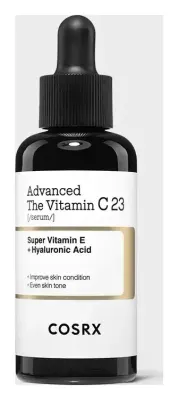
COSRX Advanced The Vitamin C 23 Serum
Ascorbic Acid (Vitamin C) 23%
Marketed as fragrance free.
Check price on AmazonConsider this when
- You prefer this vitamin C derivative formula and do not need to avoid its citrus scent oils
- You accept an added exfoliating acid; its presence is not proof of better results or lower irritation
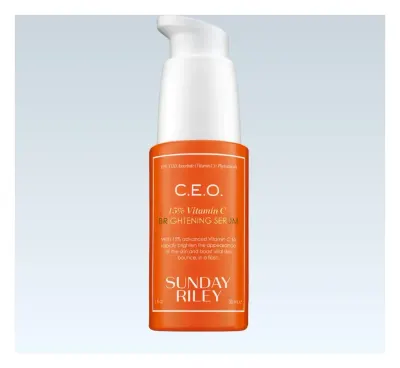
Sunday Riley C.E.O. 15% Vitamin C Brightening Serum
Vitamin C (THD Ascorbate) 15%
Scent ingredients flagged.
Check price on AmazonMoisturizers for skin that feels tight
Choose Propolis Light Cream if you specifically want a moisturizer led by propolis extract and are not avoiding bee-derived ingredients. Choose Hyaluronic Acid Intensive Cream if you want its sodium-hyaluronate formula instead; it lists macadamia seed oil. Neither choice is an allergy-safety recommendation.
Important limit: Shared water-binding and softening ingredients do not establish equivalent hydration. Bee-derived materials and macadamia oil are important differences.
Shared recorded base ingredient names (12, excluding water)
Presence only, not equal amounts or effects. Optional names do not count.
- Butylene Glycol
- Glycerin
- Caprylic/Capric Triglyceride
- Helianthus Annuus (Sunflower) Seed Oil
- 1,2-Hexanediol
- Cetearyl Olivate
- Cetearyl Alcohol
- Sorbitan Olivate
- Allantoin
- Arginine
- Carbomer
- Xanthan Gum
Consider this when
- You prefer the brand's light, gel-like cream format
- Bee-derived ingredients fit your preferences and clinical avoidance advice
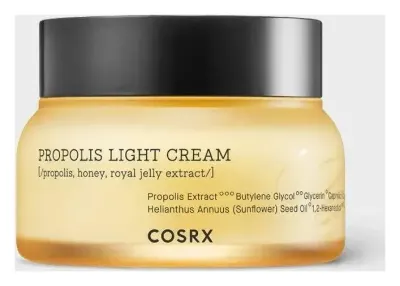
COSRX Full Fit Propolis Light Cream
Propolis Extract 64%
Marketed as fragrance free.
Check price on AmazonConsider this when
- You want to compare a water-binding moisturizer rather than buy both creams
- You accept its oil-containing formula, including listed macadamia seed oil
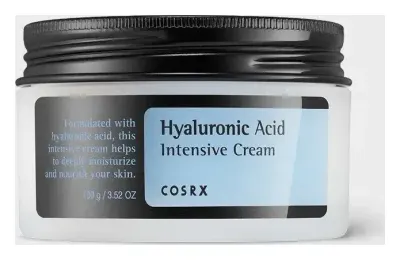
COSRX Hyaluronic Acid Intensive Cream
Hyaluronic Acid
Marketed as fragrance free.
Check price on AmazonFilter exact active forms and strengths · Method and limitations.