CeraVe Moisturizing Cream vs Healing Ointment
Should I use CeraVe Moisturizing Cream or CeraVe Healing Ointment for a damaged skin barrier?
Short answer
Choose Moisturizing Cream for everyday all-over moisturizing of dry skin; it's a water-based cream with ceramides, hyaluronic acid and some petrolatum. Choose Healing Ointment for cracked, chapped or very dry patches, lips and hands; it declares 46.5% petrolatum as a skin protectant and is mostly oils and waxes. Many people use the cream all over and the ointment on the worst spots. Both have CeraVe's three ceramides, are sold as fragrance free and carry the National Eczema Association seal.
What this means for you
Start with what you notice
If your skin feels dry all over, a cream is easier to live with. If it's cracked, raw-feeling or chapped in spots, an ointment protects those spots better.
The ingredient names, translated
A cream is mostly water with oils, so it spreads easily and sinks in. An ointment is mostly oil and wax, so it sits on top as a seal that slows water loss. Healing Ointment is sold as a skin protectant, with petrolatum as its declared active ingredient. Moisturizing Cream also contains petrolatum, but lower in the formula, after water, glycerin and several emollients.
How to decide
- Dry, tight skin on face or body every day? Moisturizing Cream.
- Cracked hands, chapped lips, rough elbows, or skin peeling from a retinoid? Healing Ointment on those spots.
- Both? Cream all over after a shower, then a thin layer of ointment on the driest areas, especially at night.
What to expect
Either should make dry skin feel more comfortable, and the ointment can protect chapped or cracked skin while it heals. Neither treats eczema or infection. The ointment is greasy by design. We haven't tested either product.
General guidance, not a test of these products: AAD: dermatologists' tips for relieving dry skin; AAD: how to select a moisturizer for eczema. Each product's label source is linked on its product page.
| Product | Size | Key ingredients | Skin type (brand) | Fragrance | Worth knowing | Source |
|---|---|---|---|---|---|---|
| Brand doesn't list it | Brand doesn't name one | normal, dry, sensitive skin | Marketed as fragrance free | No flags recorded; not a safety guarantee | Brand's page Checked | |
| Brand doesn't list it | Petrolatum 46.5% | oily, dry, combination, sensitive, normal skin | Marketed as fragrance free | No flags recorded; not a safety guarantee | Brand's page Checked |
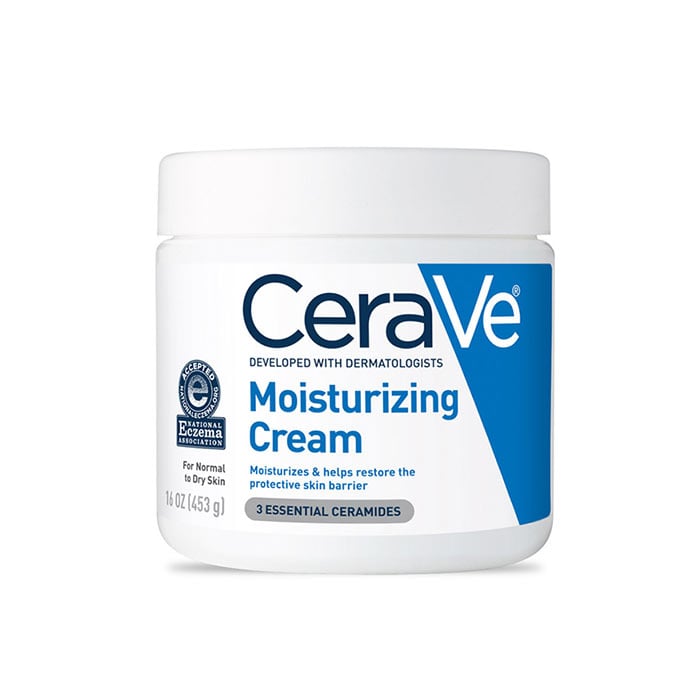
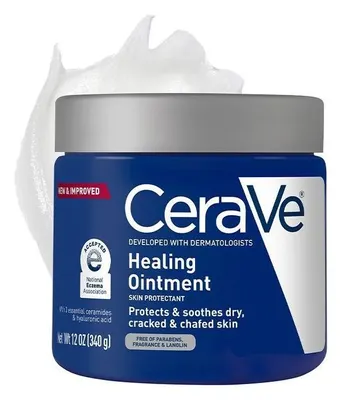
A cream vs a protective ointment
CeraVe Moisturizing Cream is a thick, tub-style cream. Water and glycerin lead the label, followed by fatty alcohols, emollients and petrolatum, then CeraVe’s three ceramides (NP, AP and EOP), dimethicone and hyaluronic acid. CeraVe lists it for normal, dry and sensitive skin, on face and body, for ages 3 and up.
CeraVe Healing Ointment is a skin protectant. It declares petrolatum 46.5% as its active ingredient, and the rest of the label starts with mineral oil, paraffin, ozokerite and dimethicone, so there’s very little water. It adds the same three ceramides, hyaluronic acid and panthenol. CeraVe says it temporarily protects and helps relieve chafed, chapped or cracked skin.
Both are sold as fragrance free and carry the National Eczema Association’s Seal of Acceptance. CeraVe also says the ointment is free of dyes, preservatives and lanolin.
How to use them together
The AAD’s dry skin tips favor creams and ointments over lotions. A practical split: cream all over after showering while skin is damp, then a thin layer of ointment on the spots that crack or chap. CeraVe’s own directions for the ointment are to apply it after cleansing and moisturizing.
For more, see our eczema-prone skin guide, damaged skin barrier guide and moisturizers for retinol peeling.
Manufacturer sources
Sources and label-check dates are recorded on the product pages.
Which is best for you?
CeraVe Moisturizing Cream
Best if you want one cream for dry skin on your face and body every day.
Also consider it when
- Ointments feel too greasy to wear during the day
CeraVe Healing Ointment
Best if you have cracked, chapped or chafed patches that need a protective seal.
Also consider it when
- You want a thin layer on lips, hands or retinoid-dry spots overnight
Common questions
Can I use CeraVe Healing Ointment on my face?
CeraVe lists it for face and body. It's heavy, so most people use a thin layer on dry spots or at night rather than all over.
Is Healing Ointment the same as petroleum jelly?
It's petrolatum-based, with 46.5% petrolatum declared as the active, but the label also lists mineral oil, paraffin, ceramides, hyaluronic acid and panthenol.
Which is better for eczema-prone skin?
Both carry the National Eczema Association Seal of Acceptance. The AAD advises a fragrance-free cream or ointment rather than a lotion. The cream is easier all over; the ointment suits cracked patches. See a dermatologist for eczema treatment.