Acne guide
Work out what kind of breakout you have, what over-the-counter ingredients can and cannot do, and when to see a dermatologist.
What kind of bumps might these be?
Use these guides to explore common possibilities; they cannot diagnose a skin condition.
Are these closed comedones, fungal acne or keratosis pilaris?
Small skin-coloured forehead bumps are most often closed comedones (clogged pores) or fungal acne (Malassezia folliculitis). Keratosis pilaris is possible but usually sits on the upper arms and thighs. Clues: comedones come in mixed sizes alongside blackheads; fungal acne is a sudden itchy cluster of same-sized bumps; KP feels rough and dry. Only a dermatologist can confirm which it is.
Could these be fungal acne (Malassezia folliculitis)?
"Fungal acne" is Malassezia folliculitis: hair follicles inflamed by a yeast that normally lives on everyone's skin. Unlike acne, it usually itches, the bumps are small and all look the same, and there are no blackheads. It's common on the chest, back, forehead and hairline, often after antibiotics, heat or sweating. It needs antifungal treatment, and a dermatologist can confirm it with a skin scraping.
Are they closed comedones or whiteheads?
Closed comedones are pores blocked by oil and dead skin under a closed surface, so they show as small skin-coloured or white bumps, usually on the forehead and chin. A topical retinoid is the first-line treatment; adapalene 0.1% is sold without a prescription in the US. Expect six to eight weeks before clear improvement, and keep going afterwards, because new comedones keep forming.
Are the dark dots blackheads or sebaceous filaments?
Most tiny grey or tan dots on the nose are sebaceous filaments, not blackheads. Filaments are a normal lining of oil and dead skin in every pore: flat, light-coloured, and they refill within about a month if squeezed. Blackheads are true clogged pores (open comedones): darker, often slightly raised, and a form of acne. Pore strips pull out both temporarily but stop neither from coming back.
We may earn a commission when you buy through links in these guides. It never changes what we recommend.
- Start here: what kind of acne is it?
- Best picks by need
- Fungal acne (Malassezia folliculitis)
- Blackheads and clogged pores
- Forehead acne, makeup and pore-clogging ingredients
- Treatments and routines
- Hormonal, body acne and marks
- More acne guides
Start here: what kind of acne is it?

Types of acne explained: blackheads, whiteheads, papules, pustules, nodules and cysts
Acne comes in two broad groups. Non-inflammatory acne is blackheads (open comedones) and whiteheads (closed comedones): clogged pores without redness. Inflammatory acne is papules, pustules, nodules and cysts: red, swollen spots, with nodules and cysts sitting deep in the skin and most likely to scar. "Hormonal acne" isn't a separate spot type; it describes a pattern, often tender spots along the jawline and chin.
Forehead Bumps: Comedones, Fungal Acne or KP?
Small skin-coloured forehead bumps are most often closed comedones (clogged pores) or fungal acne (Malassezia folliculitis). Keratosis pilaris is possible but usually sits on the upper arms and thighs. Clues: comedones come in mixed sizes alongside blackheads; fungal acne is a sudden itchy cluster of same-sized bumps; KP feels rough and dry. Only a dermatologist can confirm which it is.

When to see a dermatologist for acne: red flags, what to bring, and in-office options
See a dermatologist if you have deep, painful nodules or cysts, acne that's scarring or leaving dark marks, or acne that hasn't improved after 6 to 8 weeks of over-the-counter treatment. Also go if acne appeared suddenly as an adult, comes with irregular periods or extra hair growth, started with a new medicine, or is affecting your mood. You don't need severe acne to benefit.
Best picks by need
Best Face Wash for Acne-Prone Skin
For most acne-prone skin, CeraVe Renewing SA Cleanser is the simplest pick: a fragrance-free salicylic acid wash with ceramides and niacinamide for face and body. For oily skin that likes foam, Lab Series Clear LS Deep Pore Purifying Gel Face Wash also has salicylic acid but lists fragrance. If you already use an acne treatment that dries your skin, switch to a gentle wash such as CeraVe Hydrating Facial Cleanser.
Best Moisturizer for Acne-Prone Skin
Acne-prone skin still needs moisturizer, especially alongside drying acne treatments. CeraVe PM Facial Moisturizing Lotion is a fragrance-free, oil-free lotion with niacinamide and ceramides. For a lighter, shine-free feel, Laneige Balance Mode Shine Control Weightless Moisturizer is sold as fragrance free and non-comedogenic. If you want a moisturizer with its own exfoliant, Dermalogica Acne Biotic Moisturizer has 0.5% salicylic acid.
Best BHA Exfoliant for Blackheads
For blackheads, a leave-on BHA used once a day works better than any scrub. CeraVe BHA Exfoliating Toner has 2% salicylic acid with niacinamide and ceramides and is sold as fragrance free. COSRX BHA Blackhead Power Liquid uses betaine salicylate, a related BHA ingredient, with niacinamide and no fragrance or essential oils on its label. Start every other day and use one acid product at a time.
Fungal acne (Malassezia folliculitis)
Fungal acne (Malassezia folliculitis): how to tell if it's fungal and what helps
"Fungal acne" is Malassezia folliculitis: hair follicles inflamed by a yeast that normally lives on everyone's skin. Unlike acne, it usually itches, the bumps are small and all look the same, and there are no blackheads. It's common on the chest, back, forehead and hairline, often after antibiotics, heat or sweating. It needs antifungal treatment, and a dermatologist can confirm it with a skin scraping.
Fungal acne ingredients: what 'FA-safe' lists get wrong, and which actives have evidence
No ingredient list can be proven "fungal-acne safe". The lists assume Malassezia yeast feeds on certain oils and esters, but lab research shows its key enzymes break down many fats, including triglycerides such as MCT oil and the fats in your own skin oil. Better evidence points to heavy, occlusive products as a trigger and to antifungals such as ketoconazole, zinc pyrithione and selenium sulfide as treatment.
Blackheads and clogged pores
Blackheads vs sebaceous filaments: are those dots on your nose really blackheads?
Most tiny grey or tan dots on the nose are sebaceous filaments, not blackheads. Filaments are a normal lining of oil and dead skin in every pore: flat, light-coloured, and they refill within about a month if squeezed. Blackheads are true clogged pores (open comedones): darker, often slightly raised, and a form of acne. Pore strips pull out both temporarily but stop neither from coming back.
How to clear blackheads: what works, what doesn't, and how long it takes
To clear blackheads, use a product that stops pores clogging rather than one that pulls plugs out. Dermatologists recommend a topical retinoid (adapalene 0.1% gel is sold without a prescription in the US), often with a benzoyl peroxide wash. Salicylic acid at 0.5–2% is an OTC alternative. Give it six to eight weeks. Don't scrub or squeeze; if blackheads persist, a dermatologist can extract them safely.
Closed comedones (whiteheads): why they're so stubborn and what actually clears them
Closed comedones are pores blocked by oil and dead skin under a closed surface, so they show as small skin-coloured or white bumps, usually on the forehead and chin. A topical retinoid is the first-line treatment; adapalene 0.1% is sold without a prescription in the US. Expect six to eight weeks before clear improvement, and keep going afterwards, because new comedones keep forming.
Forehead acne, makeup and pore-clogging ingredients
Forehead acne: hair products, makeup, hats and headbands (and how to find your trigger)
Forehead and hairline breakouts are often caused by products. Oil from hair products can travel onto the skin and cause small whiteheads along the hairline (pomade acne), and makeup can do the same (acne cosmetica). Hats, headbands and helmets add heat, sweat and friction. Switching to non-comedogenic products and washing anything that touches your forehead usually helps within four to six weeks.
Makeup for acne-prone skin: choosing, applying and removing it without breakouts
You can wear makeup if you have acne. Dermatologists recommend products labelled "non-comedogenic", "oil-free" or "won't clog pores", a light application, removing all makeup every night, and cleaning brushes weekly. "Non-comedogenic" is a screening claim, not a guarantee, so if a product seems to cause tiny bumps, stop it: makeup breakouts can take days to months to appear.
Comedogenic ingredients and ingredient checkers: what the ratings mean and their limits
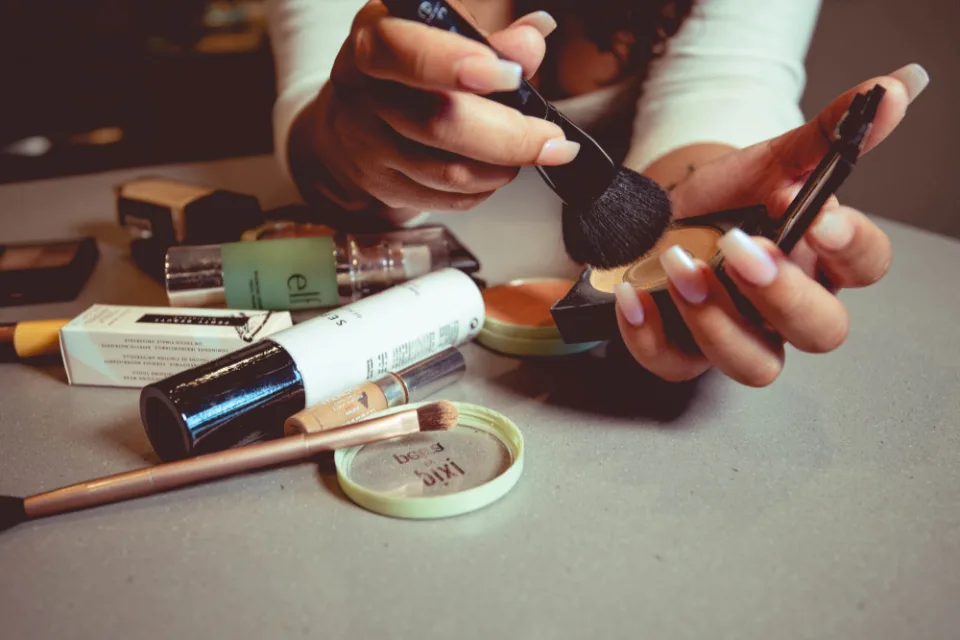
Comedogenic ratings come mostly from 1980s rabbit-ear tests, which are more sensitive than human skin and gave different results in different labs. They're useful for spotting ingredients worth caution, such as some isopropyl esters, but a listed ingredient doesn't make a finished product clog pores. "Non-comedogenic" isn't regulated. Use checkers as a rough filter, then judge by how your skin responds.
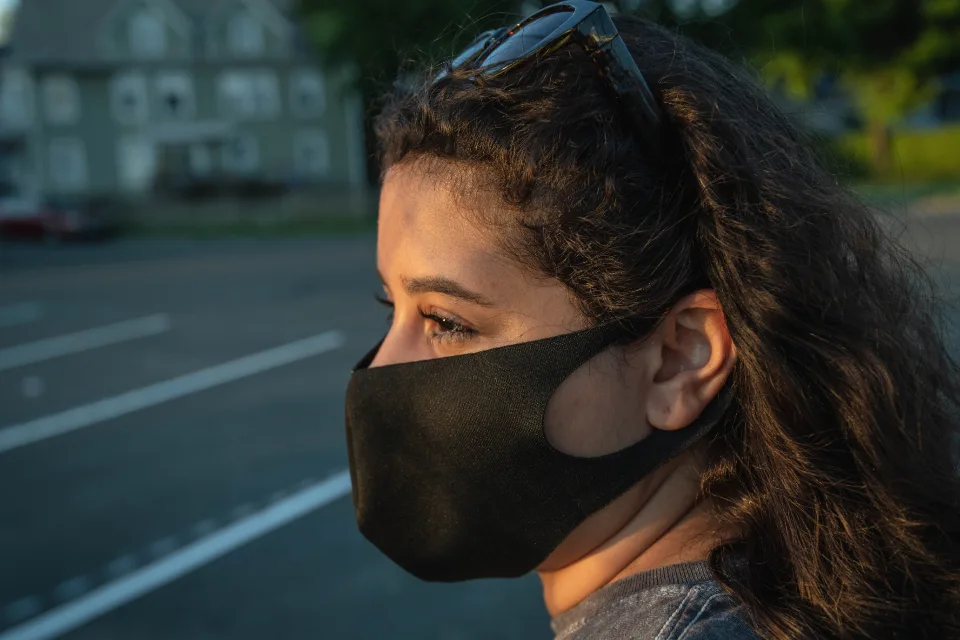
Maskne and acne mechanica: acne from masks, helmets, chin straps, headbands and friction
Acne mechanica is acne triggered by friction, pressure and trapped heat and sweat, from things like face masks (maskne), helmets, chin straps and headbands. It often starts as small, rough bumps that are easier to feel than see. Put clean, soft padding between gear and skin, wear breathable fabrics, change out of sweaty gear quickly and use a salicylic acid product. See a dermatologist if it lasts beyond 6 to 8 weeks.
Treatments and routines
OTC acne treatments compared: benzoyl peroxide vs salicylic acid vs adapalene vs azelaic acid vs sulfur
Adapalene (a retinoid) and benzoyl peroxide have the strongest evidence of the over-the-counter options: adapalene unclogs pores and benzoyl peroxide kills acne-causing bacteria. Salicylic acid and azelaic acid are gentler, with weaker recommendations. Sulfur is an older, mild option, and hypochlorous acid is still experimental. Start with one, give it 6 to 8 weeks, and add a second only if needed.
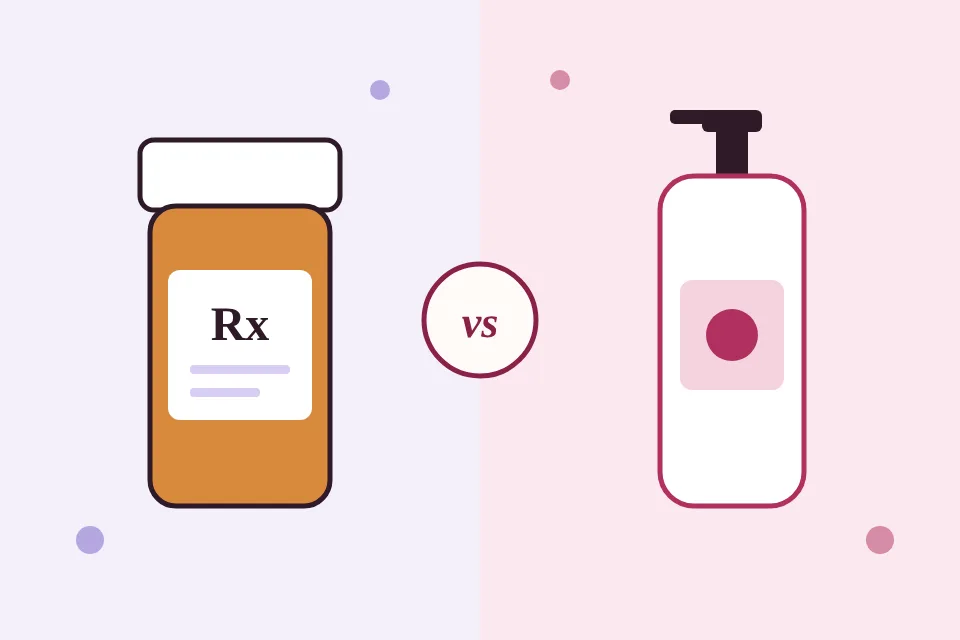
Prescription vs OTC acne treatments: what a dermatologist can add, from tretinoin to isotretinoin
Over-the-counter benzoyl peroxide and adapalene clear many cases of mild acne. Prescriptions add stronger retinoids such as tretinoin, topical and oral antibiotics, hormonal treatments such as spironolactone and the pill, and isotretinoin for severe acne. See a dermatologist if OTC treatment hasn't helped after 6 to 8 weeks, or straight away for deep, painful nodules or cysts, which store-bought products can't clear.
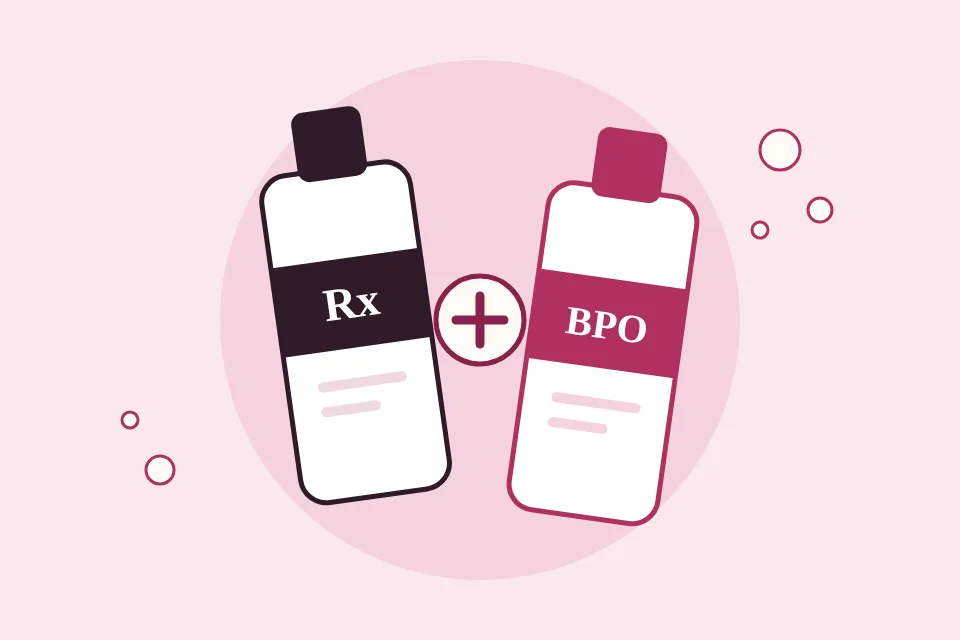
Clindamycin vs benzoyl peroxide for acne: how they differ and why they're paired
Clindamycin and benzoyl peroxide both reduce acne-causing bacteria, and the 2024 American Academy of Dermatology guidelines strongly recommend both. The difference is resistance: clindamycin is an antibiotic, so bacteria can become resistant to it, and the guidelines say not to use it on its own. Benzoyl peroxide is sold over the counter and kills resistant strains too, which is why prescriptions usually combine the two.
How to build an acne skincare routine: a minimal, step-by-step plan
A good acne routine is short: a gentle cleanser twice a day, one acne treatment applied as a thin layer over the whole acne-prone area, a non-comedogenic moisturiser, and sunscreen in the morning. Use it for 6 to 8 weeks before judging it. Add a second treatment only if needed, choose one that works differently, and check labels for hidden actives so you don't double up.
Pimple patches and spot treatments: hydrocolloid vs microneedle, and what to do instead of popping
Hydrocolloid pimple patches work best on pimples with a white head or ones that have already opened: they absorb fluid, protect the spot and stop you picking. They do little for blackheads or deep, closed cysts. Microneedle patches deliver ingredients a little deeper, but the evidence is small. Patches and spot treatments are extras; they don't replace treatment of the whole area, and you shouldn't pop pimples.
Acne after Accutane: why it comes back and what a dermatologist may consider
Acne can come back after isotretinoin (Accutane). In a large 2025 US study, about 22% of patients needed another acne medicine by mouth afterwards and about 8% took a second course. A higher total dose over the course was linked to lower relapse. A daily topical retinoid is a common way to keep skin clear, and a dermatologist may consider hormonal treatment or another course.
Hormonal, body acne and marks

Hormonal acne on the jawline and chin: causes, cycle flares and treatment options
"Hormonal acne" usually means acne on the lower face, jawline and neck that flares around periods, often in adult women. Fluctuating hormones, stress, and starting or stopping birth control can all trigger it. Over-the-counter treatments help some people, but the treatments that target hormones, such as birth control pills, spironolactone and clascoterone cream, are prescription-only, so it's worth seeing a dermatologist.
How to get rid of back and chest acne (body acne): a step-by-step routine
For back and chest acne, dermatologists recommend a benzoyl peroxide wash left on the skin for 2 to 5 minutes before rinsing, plus adapalene 0.1% gel to unclog pores. Shower and change soon after sweating, wear loose clothing, and avoid friction from straps. Expect results in 6 to 8 weeks and full clearing in 3 to 4 months. Itchy, uniform bumps may be fungal acne instead.

Red marks, dark marks or acne scars? PIE vs PIH vs atrophic scars, and what OTC can fix
A flat red or pink mark after a pimple is post-inflammatory erythema (PIE); a flat brown, grey or dark mark is post-inflammatory hyperpigmentation (PIH). Both are colour changes, not scars, and usually fade over months. Sunscreen helps, and azelaic acid or retinoids can speed fading of dark marks. Indented or raised acne scars are a change in skin texture and usually need a dermatologist's procedures.

Acne myths: toothpaste, dirty skin, the sun, diet, 'biofilm' and more, fact-checked
Acne isn't caused by dirty skin, and blackheads aren't dirt: the NHS says the causes are beneath the skin. Toothpaste irritates spots rather than drying them, and there's no good evidence the sun clears acne. Diet may play a small role, mainly high-glycemic foods and milk. "Biofilm" is a research theory, not an established cause. What works is consistent treatment for 6 to 8 weeks.
More acne guides
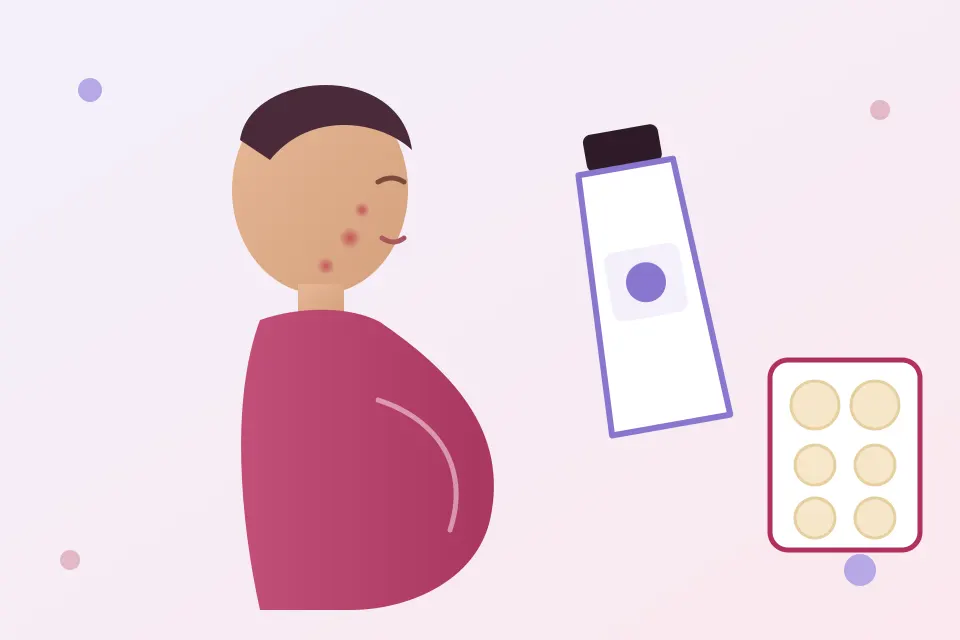
Acne during pregnancy: what to stop, what dermatologists suggest, and a simple routine
For acne during pregnancy, dermatologists usually suggest azelaic acid, benzoyl peroxide in limited amounts and, with a prescription, topical clindamycin. Glycolic acid and low-strength salicylic acid are other options. Stop isotretinoin and tazarotene straight away, and most experts advise stopping tretinoin and adapalene too. Check every acne product with your doctor or pharmacist, including over-the-counter ones.
Does full-coverage and body makeup clog pores? Heavy foundation, body makeup and breakouts
Heavy makeup can clog pores, but coverage itself isn't the cause. Breakouts from makeup (acne cosmetica) come from particular ingredients in a particular person's skin, made more likely when thick layers stay on for hours, get sweaty or rubbed under clothing, or aren't fully removed. Choose products labeled non-comedogenic or oil-free, wear heavy coverage only where you need it, and take all of it off the same day.
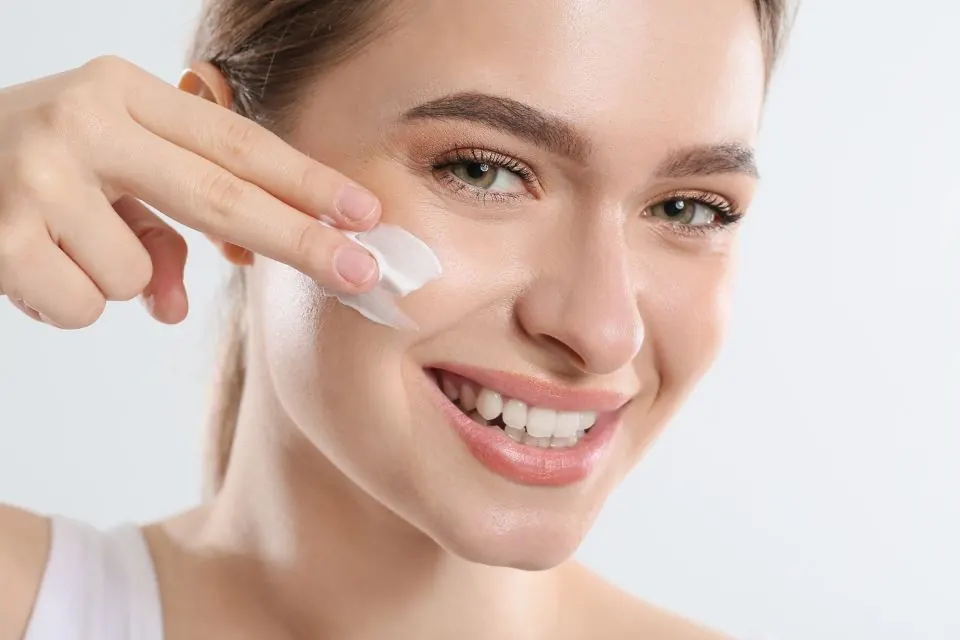
Purging or Breaking Out? How to Tell After a New Product
'Purging' is the idea that a product which speeds up skin turnover, such as a retinoid or an exfoliating acid, brings existing clogs to the surface faster, so you briefly see more spots in your usual areas. A breakout from a product is new spots in new places, often with itching or stinging, from a product with no such active. The evidence for purging is thin: a 2009 review found no trial data showing retinoids cause acne to flare. So if spots appear where you don't usually break out, or from a moisturizer, sunscreen or makeup, treat it as a reaction and stop the product.
Acne guide: common questions
Can this guide diagnose my bumps?
No. These pages offer general education, not a diagnosis. Similar-looking bumps can have different causes, so ask a dermatologist or another qualified healthcare professional about persistent or unclear bumps.
When should I see a dermatologist?
Seek professional advice for painful or cystic acne, scarring, bumps you cannot identify, acne that is not clearing, or questions about prescription treatment.
Do I need to buy a product to follow these guides?
No. Product suggestions are included only when they are relevant to a guide; they are optional and do not replace medical care.