Red marks, dark marks or acne scars? PIE vs PIH vs atrophic scars, and what OTC can fix
How to tell red marks (PIE), dark marks (PIH) and true acne scars apart, how long marks take to fade, what OTC products can help, and which scars need a dermatologist.
Short answer
A flat red or pink mark after a pimple is post-inflammatory erythema (PIE); a flat brown, grey or dark mark is post-inflammatory hyperpigmentation (PIH). Both are colour changes, not scars, and usually fade over months. Sunscreen helps, and azelaic acid or retinoids can speed fading of dark marks. Indented or raised acne scars are a change in skin texture and usually need a dermatologist's procedures.
We may earn a commission when you buy through links on this page. It never changes what we recommend.
What this means for you
Start with what you notice
Tell a flat colour change from a change in skin texture before you choose anything.
The ingredient names, translated
Most marks left by acne are colour changes that fade over time: red marks on lighter skin and brown or grey marks on darker skin. Sunscreen and a few ingredients can help them fade faster. Dents or raised bumps are true scars; creams can't fix those, but a dermatologist has several treatments.
How to decide
- A flat red or pink mark with no dip or raise is post-inflammatory erythema, a colour change.
- A flat brown, grey or dark mark is post-inflammatory hyperpigmentation, also a colour change.
- A dent, pit or raised bump you can feel with a fingernail is a true scar. Creams do not fix those.
- If the colour is gone and the skin is level, there is nothing left to treat.
What to expect
Marks fade on their own over weeks to months, and more slowly on deeper skin tones. Sunscreen matters more than any serum. A dermatologist's procedures for true scars are a separate thing, only worth asking about once you are sure the texture has changed.
General guidance, not a test of these products: Acne scars (American Academy of Dermatology); How to fade dark spots (American Academy of Dermatology); Postinflammatory hyperpigmentation (DermNet); Talakoub L, Wesley NO. Postinflammatory erythema (Dermatology News, 2016); Acne scarring (DermNet); Acne scars: what's the best treatment? (Mayo Clinic); Acne treatment: how dermatologists treat acne (American Academy of Dermatology); Azelaic acid (DermNet); Back acne: how to get rid of it (American Academy of Dermatology). Each product's label source is linked on its product page.

Is it a mark or a scar?
The simplest test: run your finger over it, or look at it side-on in good light.
| PIE (red mark) | PIH (dark mark) | Atrophic scar | Hypertrophic / keloid scar | |
|---|---|---|---|---|
| Colour | Red, pink or purplish | Brown, grey, slate-blue or darker than your skin | Skin-coloured, can be paler or discoloured | Skin-coloured, pink or darker |
| Texture | Flat | Flat | Dip or pit | Raised |
| Cause | Blood vessel changes after inflammation | Extra pigment after inflammation | Loss of tissue | Excess scar tissue |
| More common in | Lighter skin | Darker skin | Anyone with inflamed acne | Darker skin; jawline, chest, back |
| Fades on its own? | Usually, slowly | Usually, over months to years | Rarely | Rarely; can recur after treatment |
Sources: AAD, DermNet PIH, Talakoub & Wesley, DermNet acne scarring.
The AAD puts it plainly: a flat patch of colour after acne clears usually isn’t a scar. It’s post-inflammatory hyperpigmentation. You can have marks and scars at the same time, and colour changes often sit on top of scars (DermNet).
Red marks (PIE)
Post-inflammatory erythema is the pink, red or purplish mark that lingers after a pimple, caused by new and dilated blood vessels. A dermatologist writing in Dermatology News notes it’s most often seen in lighter skin types and often follows cystic acne.
What helps:
- Time. DermNet notes colour changes after acne tend to fade over months or longer.
- Not picking, so you don’t keep re-inflaming the spot.
- Treating active acne, so new marks don’t form.
- In-office treatment. Vascular lasers (such as pulsed dye) and microneedling are used for stubborn PIE, though the authors say the evidence is mostly anecdotal. They mention azelaic acid and some other topicals may temporarily reduce redness, but there are no well-studied creams with long-term data.
Skin Realist check: there’s no proven over-the-counter cream for red marks. Products marketed for “post-acne redness” may make skin look calmer for a while, but time and sun protection do most of the work.
Dark marks (PIH)
Post-inflammatory hyperpigmentation is brown, grey or darker than your skin. DermNet explains that inflammation stimulates the skin to make more melanin. It’s more common, more intense and longer-lasting in darker skin.
If brown patches appeared without breakouts, often matching on both cheeks, the forehead or upper lip, that pattern is more typical of melasma. See what works for melasma and hyperpigmentation.
How long do dark marks last?
The AAD says:
- a spot a few shades darker than your skin usually fades within 6 to 12 months
- deeper discoloration, often slate blue to grey, can take years
- treatment can speed up fading
DermNet explains why: pigment in the top layer of skin (epidermal) responds to treatment, while pigment that has dropped deeper (dermal, often grey-blue) doesn’t respond to physical treatments and fades slowly.
What fades dark marks?
- Sunscreen, every day. The AAD recommends broad-spectrum, water-resistant SPF 30+ sunscreen, ideally a tinted one with iron oxide, which also protects against visible light. Reapply every two hours outdoors. The AAD also says sun can darken acne and make it last longer (AAD back acne).
- Treat the acne. Stopping new breakouts stops new marks.
- Fading ingredients. The AAD lists azelaic acid, glycolic acid, kojic acid, vitamin C and retinoids (retinol, tretinoin, adapalene gel, tazarotene). Two of these also treat acne: the AAD says retinoids and azelaic acid can lighten dark spots left after acne, and DermNet notes azelaic acid is used for post-acne pigmentation, particularly in darker skin. DermNet also lists niacinamide among other options.
Cautions from the AAD:
- Avoid imported “lightening” products that may contain hidden steroids or mercury.
- Never put liquid bleach on your skin.
- Use gentle products and stop anything that burns or stings, because irritation can create more dark marks.
- See a dermatologist if OTC options don’t help; prescription or combination treatment may be needed.
True acne scars
Types of acne scars
According to DermNet, most acne scars are atrophic (depressed):
- Ice-pick: narrow, V-shaped, deeper than they are wide; the most common type
- Boxcar: round or oval dips with sharp edges, wider than ice-pick scars
- Rolling: wide dips with sloping edges that smooth out when the skin is stretched
Less often, scars are raised:
- Hypertrophic: raised, about the size of the original spot
- Keloid: excess scar tissue that grows beyond the original spot; common on the jawline, chest and upper back, and more common in skin of colour
Who gets acne scars?
DermNet lists moderate to severe acne (especially nodules and cysts), picking or squeezing spots, smoking, and longer-lasting or more severe acne. The AAD adds that early treatment matters more if a close blood relative has acne scars.
Can OTC products fix acne scars?
No. Creams can’t fill a dip or flatten a raised scar. The AAD says scars can fade but rarely disappear completely on their own. What OTC products can do:
- treat active acne so new scars don’t form
- fade the colour around a scar, which makes it less noticeable
- Mayo Clinic notes that sunscreen limits the contrast between scarred and unscarred skin
What do dermatologists use for acne scars?
Treatment depends on the scar type, your skin type and your goals, and often combines several methods (DermNet, Mayo Clinic):
| Scar type | Options a dermatologist may discuss |
|---|---|
| Rolling | Subcision (loosening the band that tethers the scar), microneedling |
| Boxcar | Fillers, subcision or resurfacing, depending on depth |
| Ice-pick and deep scars | Punch excision or punch grafting; fillers |
| Shallow scars | Chemical peels, microneedling, laser resurfacing, dermabrasion |
| Hypertrophic and keloid | Steroid injections, silicone gel or sheets, lasers, cryotherapy |
Things to know:
- Clear active acne first. DermNet recommends treating active acne before starting scar treatment.
- Darker skin needs care. Mayo Clinic notes laser resurfacing, chemical peels and dermabrasion carry a higher risk of colour changes in darker skin.
- Fillers are temporary, and keloids often come back even after successful treatment.
How do I prevent acne marks and scars?
From the AAD:
- Treat acne early, as soon as breakouts appear. Deeper breakouts are more likely to scar.
- Don’t pick, pop, squeeze or scratch. It increases inflammation, infection and discoloration.
- Keep your hands off your face.
Add daily sunscreen to limit darkening, and see pimple patches and spot treatments for what to do instead of squeezing.
When should you see a dermatologist?
- You have nodules or cysts, or acne that’s leaving scars: early treatment prevents more
- Dark marks haven’t faded after 6 to 12 months of sunscreen and OTC treatment
- You want treatment for indented or raised scars
- A scar is growing beyond the original spot (possible keloid)
Products with dark-mark ingredients on the label
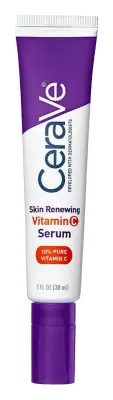
Vitamin C
Ingredient list includes Ascorbic Acid; brand states 10%
CeraVe Skin Renewing Vitamin C Serum
Vitamin C (L-ascorbic acid) 10% · oily, dry, combination, sensitive, normal skin · no scent flags recorded
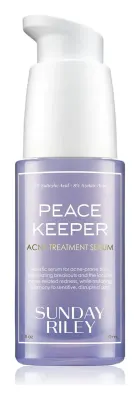
Azelaic Acid
Ingredient list includes Azelaic Acid
Sunday Riley Peacekeeper Acne Treatment Serum
Salicylic Acid + Azelaic Acid · scent ingredients flagged
Vitamin C
Ingredient list includes Ascorbic Acid
Abib - Glutathiosome Dark Spot Serum Vita Drop - 50ml (2ea) Set
Abib · Targeted Vitamin C & Brightening Correctors
Glycolic Acid
Ingredient list includes Glycolic Acid
COSRX - AHA/BHA Clarifying Treatment Toner (2ea) Set
COSRX · Dermatological Acne & Chemical Exfoliating Liquids


Common questions
Is a dark spot after acne a scar?
Usually not. The American Academy of Dermatology says a flat patch of colour after acne clears is usually post-inflammatory hyperpigmentation, not a scar. It fades over time; a scar changes the skin's texture.
What's the difference between PIE and PIH?
PIE (post-inflammatory erythema) is red, pink or purplish and caused by blood vessels; it's seen more on lighter skin. PIH (post-inflammatory hyperpigmentation) is brown, grey or dark and caused by extra pigment; it's more common and longer-lasting on darker skin.
How long do acne dark spots take to fade?
The AAD says a spot a few shades darker than your skin usually fades within 6 to 12 months, while deep slate-blue or grey discoloration can take years. Treatment and sunscreen can speed it up.
What fades post-acne dark marks?
Daily sunscreen first. The AAD lists azelaic acid, glycolic acid, kojic acid, vitamin C and retinoids, including adapalene, as ingredients that can fade dark spots. Treating active acne stops new marks forming.
Can OTC products get rid of acne scars?
Not true indented or raised scars. Creams can help the colour around a scar and prevent new scars by treating acne, but changing the texture usually needs in-office procedures such as subcision, fillers, microneedling, lasers or surgery.
What types of acne scars are there?
Most are depressed (atrophic): ice-pick (narrow and deep), boxcar (wider with sharp edges) and rolling (wide with sloping edges). Less often they're raised: hypertrophic or keloid scars, which are more common on the jawline, chest and back.
How do I prevent acne scars?
Treat acne early, especially deep, painful spots, and don't pick or squeeze. The AAD says deeper breakouts are more likely to scar, and early treatment matters more if a close relative has acne scars.