Forehead acne: hair products, makeup, hats and headbands (and how to find your trigger)
Why breakouts cluster on the forehead and hairline: pomade acne, makeup (acne cosmetica), oily hair, bangs, hats and headbands, plus how to find and fix the cause.
Short answer
Forehead and hairline breakouts are often caused by products. Oil from hair products can travel onto the skin and cause small whiteheads along the hairline (pomade acne), and makeup can do the same (acne cosmetica). Hats, headbands and helmets add heat, sweat and friction. Switching to non-comedogenic products and washing anything that touches your forehead usually helps within four to six weeks.
We may earn a commission when you buy through links on this page. It never changes what we recommend.
What this means for you
Start with what you notice
Find which of the things that touch your forehead is the cause, before changing your skincare.
The ingredient names, translated
Forehead acne is often caused by what touches your forehead: hair products, makeup, hats, headbands and sweat. Swap to products labelled oil-free or non-comedogenic, wash pillowcases and headwear, and give it four to six weeks. If the bumps are itchy and all the same size, they may be fungal acne instead.
How to decide
- Small whiteheads in a line along the hairline point to hair products. Test by switching to ones labelled oil-free or non-comedogenic.
- Bumps where makeup sits, and not elsewhere, point to the makeup. Change one product at a time.
- Bumps under a hat, headband or helmet where sweat is trapped are a friction problem, not a product problem.
- Wash anything that rests on your forehead as often as you wear it.
What to expect
Expect four to six weeks once the cause is removed, and no change at all if you have guessed the wrong cause. Itchy, uniform bumps of the same size may be a different problem again, and none of these fixes may apply.
General guidance, not a test of these products: Hair care products and breakouts (American Academy of Dermatology); Makeup and acne (American Academy of Dermatology); Sports equipment and acne (American Academy of Dermatology); Comedonal acne (DermNet); Prindaville B, et al. Pityrosporum folliculitis: a retrospective review of 110 cases. J Am Acad Dermatol. 2018;78(3):511-514; Malassezia folliculitis (DermNet); Mills OH Jr, Kligman AM. Human model for comedogenicity testing vs the rabbit ear. Arch Dermatol. 1982;118(11):903-5 (PMID 7138047); Zatulove A, Konnerth NA. Cosmetic industry use of the rabbit-ear comedogenicity assay. Cutis. 1987;39(6):521 (PMID 2956066). Each product's label source is linked on its product page.
What causes forehead acne?
The forehead is a common place for acne for several overlapping reasons:
- It’s a comedone hotspot. DermNet notes comedonal acne (blackheads and closed comedones) most often affects the forehead and chin.
- Hair and hair products touch it. The American Academy of Dermatology (AAD) describes breakouts from hair products along the hairline and upper forehead.
- Makeup sits on it. Foundation, primer and concealer can cause acne cosmetica.
- Hats, headbands and helmets rub and trap sweat. See acne mechanica below.
- Fungal acne likes the hairline. In a review of 110 young patients, fungal acne typically involved the forehead extending into the hairline.
Not sure what your bumps are? Compare closed comedones, fungal acne and keratosis pilaris.
Can hair products cause forehead acne?
Yes. Dermatologists call acne from products you put on your skin or hair acne cosmetica; when it comes from hair products it’s often called pomade acne. According to the AAD:
- What it looks like: usually whiteheads or small flesh-coloured bumps, often felt more than seen.
- Where: along the hairline, the upper forehead and the back of the neck.
- Why: oil in hair products travels onto the skin and clogs pores. It can happen even if you’ve never had acne.
- Likely culprits: shampoos, conditioners, styling gels, waxes, pastes and sprays, with oily styling products such as pomade high on the list. Shaving creams and aftershaves can contain oil too.
What the AAD recommends:
- Stop or swap suspect products. Look for “oil-free”, “non-comedogenic”, “won’t clog pores” or “non-acnegenic” on the label.
- Wash anything your head touches: pillowcases, sheets, caps, hats, headbands and visors.
- Give it four to six weeks after stopping the problem product.
- See a dermatologist if your skin hasn’t cleared after about six weeks.
Skin Realist check: you don’t have to give up styling products. Switching to an oil-free formula and keeping it off your hairline is often enough. Change one product at a time so you know which one was the problem.
Practical habits (sensible, but not studied)
We couldn’t find research on these specific habits, but they follow directly from the AAD’s point that oil from hair products causes the problem:
- Wash your face after conditioner. If you rinse conditioner over your face, cleanse your face (and hairline) last in the shower.
- Apply styling products with your face turned away, and wipe your hairline afterwards.
- Keep product-heavy bangs off your forehead where you can, especially at night. Bangs hold hair, oil and product against the skin all day.
- Change pillowcases often, especially if you sleep with product in your hair.
Does oily hair cause forehead acne?
It’s a popular theory on Reddit, and some people report fewer forehead bumps after changing shampoo. We couldn’t find good evidence that oily hair itself causes acne. What’s established is that oil from hair products can. If your hair is oily, washing it regularly and keeping it off your forehead is a low-risk thing to try, but don’t expect a shampoo change alone to fix true comedonal acne.
Do hats, headbands and helmets cause forehead acne?
They can. The AAD describes acne mechanica: acne triggered by equipment or clothing that traps heat and sweat against the skin, with friction irritating it further. It often starts as small, rough bumps that are easier to feel than see, and can progress to pimples. The AAD names helmets (cycling, football, hockey, riding) and chin straps, among other gear.
What helps, according to the AAD:
- put clean, soft padding between equipment and your skin
- wear moisture-wicking, loose-fitting gear
- use an OTC salicylic acid treatment
- see a dermatologist if it persists after six to eight weeks of treatment
For hats and headbands, the AAD’s hair-products advice applies too: wash them regularly to remove product residue. And because heat, sweating and occlusion are triggers for fungal acne (DermNet), sweaty headwear is worth changing quickly whichever kind of bumps you have.
More on friction and sweat triggers in maskne and acne mechanica.
Can makeup cause forehead acne?
Yes. The AAD describes acne cosmetica from makeup as:
- many tiny bumps, usually on the cheeks, chin or forehead
- whiteheads that rise slightly above the skin, with some pimples
- slow to show up: a few days to six months after starting a product, which makes the cause hard to pin down
- a cycle that can keep going if you cover new breakouts with the same makeup
It often clears once you stop using the culprit product. The AAD’s tips:
- Choose products carefully: look for “oil-free”, “won’t clog pores” or “non-comedogenic”.
- Wash twice a day and after sweating, with a mild cleanser, fingertips and lukewarm water.
- Remove makeup every night, including eye makeup, with an oil-free remover, then wash gently. Don’t scrub.
- Apply makeup with a light touch. Brushes can help.
- Clean brushes weekly, and don’t share makeup or tools.
- Treat the acne: OTC benzoyl peroxide, salicylic acid or adapalene can help. Treatment can take 4 to 8 weeks to show some improvement.
Choosing foundation, primer and removers for acne-prone skin is covered in makeup for acne-prone skin.
What does “non-comedogenic” actually mean?
It means the maker believes the product won’t clog pores, usually based on screening tests. It isn’t a guarantee:
- The tests date back to the 1980s. Cosmetic companies adopted the rabbit-ear assay to support non-comedogenic claims (Zatulove & Konnerth 1987).
- Researchers who built a human test found the rabbit model more sensitive than human skin, and said weakly positive substances were probably fine for most people, with the possible exception of acne-prone people (Mills & Kligman 1982).
So the label is a useful filter, and the AAD recommends looking for it, but your own skin’s response is the real test. More in comedogenic ingredients and ingredient checkers.
How do I find what’s causing my forehead acne?
- List everything that touches your forehead: skincare, sunscreen, makeup, hair products, hats, headbands, pillowcases.
- Change one thing at a time. Start with the most likely suspect: an oily hair product or a new makeup product.
- Wait long enough. The AAD gives four to six weeks for hair-product breakouts to clear, and makeup breakouts can take weeks to months to show up.
- Keep notes or photos so you can compare honestly.
- Treat the acne at the same time. A retinoid such as adapalene, or salicylic acid, helps the comedones you already have. See closed comedones and how to clear blackheads.
Could it be fungal acne?
Consider it if the bumps itch, are all the same small size, sit along the hairline, and haven’t responded to acne treatment, especially after a course of antibiotics or a stretch of heat and sweating. See fungal acne explained.
When should you see a dermatologist?
- Forehead acne hasn’t cleared about six weeks after changing products (the AAD’s guidance for hair-product acne)
- Acne mechanica persists after six to eight weeks of treatment
- The bumps itch or you suspect fungal acne
- You have painful, deep spots or marks
Products with salicylic acid (BHA) on the label
Salicylic Acid (BHA)
Ingredient list includes Salicylic Acid
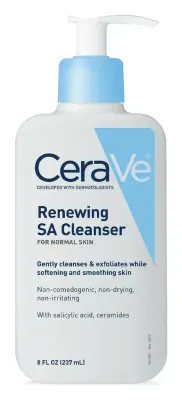
CeraVe Renewing SA Cleanser
Salicylic acid, ceramides, niacinamide, hyaluronic acid, vitamin D · normal skin · no scent flags recorded
Salicylic Acid (BHA)
Ingredient list includes Salicylic Acid
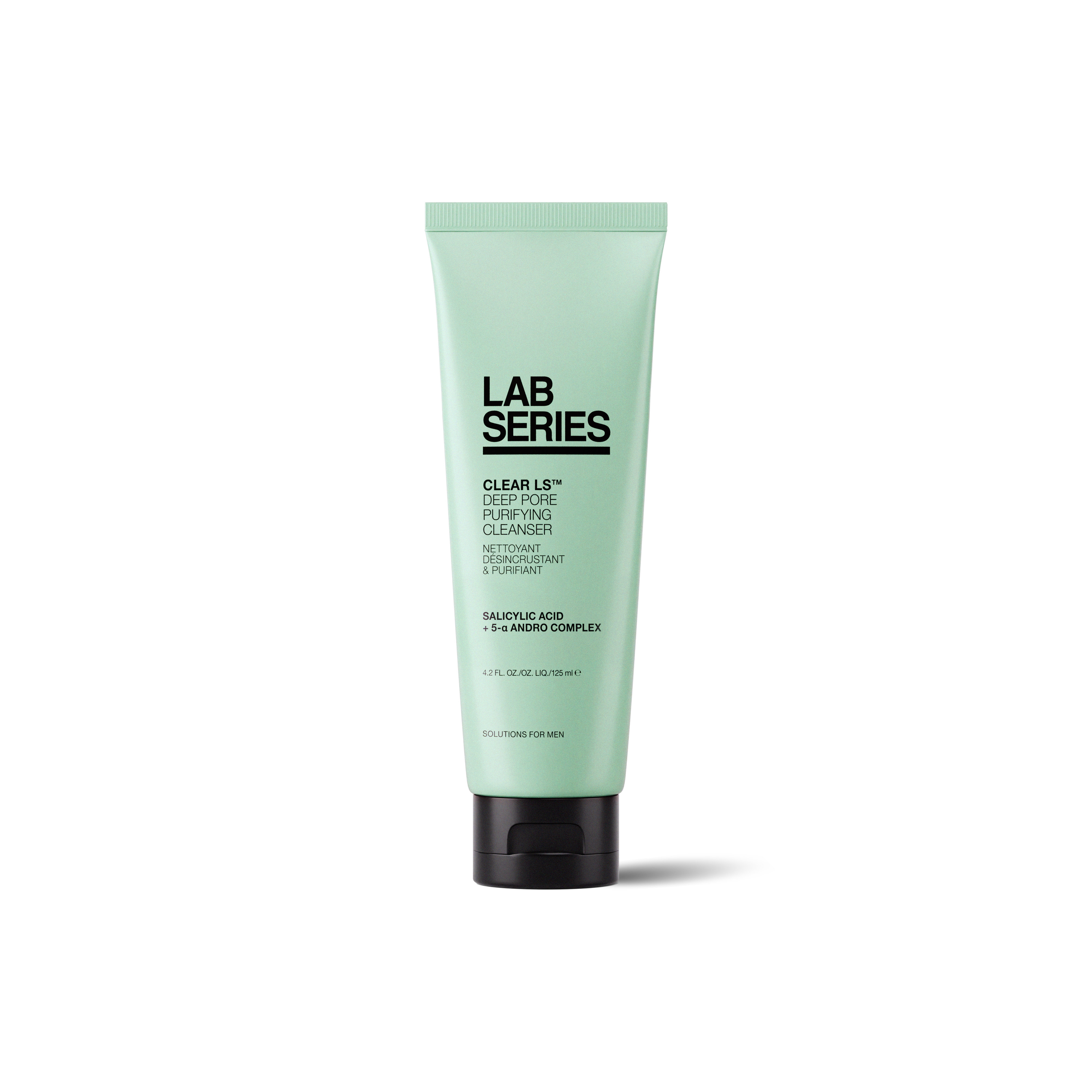
Lab Series Clear LS Deep Pore Purifying Gel Face Wash
Salicylic acid, 5-α Andro Complex, acetyl glucosamine · oily, sensitive skin · scent ingredients flagged
Salicylic Acid (BHA)
Ingredient list includes Salicylic Acid
COSRX - AC Collection Calming Foam Cleanser (Renewal) - 150ml
COSRX · Gel, Foam & Cream Facial Cleansers

Common questions
Why am I breaking out on my forehead?
Common causes are hair products, makeup, sweat and friction from hats, headbands or helmets, and comedonal acne, which DermNet says most often affects the forehead and chin. Itchy, uniform bumps along the hairline can also be fungal acne.
Can hair products cause forehead acne?
Yes. The American Academy of Dermatology says oil in hair products can travel to the skin and clog pores, causing whiteheads or small flesh-coloured bumps along the hairline, upper forehead and back of the neck. Oily styling products such as pomade are a likely culprit.
How long does it take for forehead acne to clear after changing hair products?
The AAD says to expect clearing to take four to six weeks after you stop the problem products, and to see a dermatologist if your skin hasn't cleared after about six weeks.
Does oily hair cause forehead acne?
We couldn't find good evidence that oily hair itself causes forehead acne. What is established is that oil from hair products can. Washing hair regularly and keeping product-heavy hair off your forehead are sensible, low-risk steps.
Can makeup cause forehead acne?
Yes. The AAD calls it acne cosmetica: many tiny bumps, often on the cheeks, chin or forehead. It can take a few days to six months to appear, which makes the cause hard to spot. It usually clears once you stop the product that causes it.
Do hats and headbands cause acne?
They can contribute. Trapped heat, sweat and friction can trigger breakouts (acne mechanica), and the AAD recommends washing caps, hats, headbands and visors to remove hair product residue. Sweat and occlusion are also triggers for fungal acne.
Does non-comedogenic mean it won't break me out?
No. It's a marketing claim, usually based on animal or human screening tests, not a guarantee for your skin. It's still a useful filter, and the AAD recommends looking for it.