Does full-coverage and body makeup clog pores? Heavy foundation, body makeup and breakouts
Why thick, long-wear and body makeup can lead to breakouts: acne cosmetica, sweat and friction under clothes, ingredients worth a second look, and how to remove it properly.
Short answer
Heavy makeup can clog pores, but coverage itself isn't the cause. Breakouts from makeup (acne cosmetica) come from particular ingredients in a particular person's skin, made more likely when thick layers stay on for hours, get sweaty or rubbed under clothing, or aren't fully removed. Choose products labeled non-comedogenic or oil-free, wear heavy coverage only where you need it, and take all of it off the same day.
We may earn a commission when you buy through links on this page. It never changes what we recommend.
What this means for you
Start with what you notice
Keep wearing heavy coverage, on the face or body, without it causing small bumps and breakouts.
The ingredient names, translated
Some makeup ingredients can block pores in some people. Full-coverage and body makeup is usually thicker, made to stay put, and worn for longer, sometimes under clothes where it gets hot, sweaty and rubbed. All of that makes it harder to get off and gives any pore-blocking ingredient more chance to cause trouble. Body skin breaks out too, especially the back and chest.
How to decide
- If you notice many small, even bumps where you wear the makeup and nowhere else, stop that one product for several weeks and see if they clear.
- If the bumps are where clothing, straps or a costume rub over makeup, treat friction and sweat as part of the cause, not just the formula.
- If you only need coverage for a few hours, wear it for those hours and remove it, rather than all day and night.
- If the bumps are itchy and all the same size on the chest or back, they may be fungal acne, which needs a different approach.
What to expect
Makeup-related breakouts can take days to months to appear, and four to six weeks or more to clear once the product is stopped. Non-comedogenic labels lower the odds but aren't a guarantee, and no ingredient list can predict exactly how your skin will respond.
General guidance, not a test of these products: Makeup and acne (American Academy of Dermatology); Habits that can worsen acne (American Academy of Dermatology); Back acne: how to get rid of it (American Academy of Dermatology); Sports equipment and acne (American Academy of Dermatology); Mills OH Jr, Kligman AM. Human model for comedogenicity testing vs the rabbit ear. Arch Dermatol. 1982;118(11):903-5 (PMID 7138047); Fulton JE Jr, Pay SR, Fulton JE 3rd. Rabbit-ear comedogenicity of products and ingredients. J Am Acad Dermatol. 1984;10(1):96-105 (PMID 6229554); Nguyen SH, Dang TP, Maibach HI. Rabbit-ear comedogenicity re-test of cosmetic ingredients. Cutan Ocul Toxicol. 2007;26(4):287-92 (PMID 18058303); Malassezia folliculitis (DermNet). Each product's label source is linked on its product page.
Our label-based picks
Each pick is matched to a need using what the brand's label says. We haven't tested these, so they aren't winners or guarantees of suitability.
Best first step for face makeup
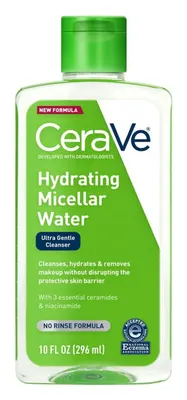
Why it fits: A no-rinse micellar water with ceramides and niacinamide that CeraVe says removes makeup, including around the eyes; sold as fragrance free.
Manufacturer source · checked 2026-10-23Best wash for breakout-prone body skin
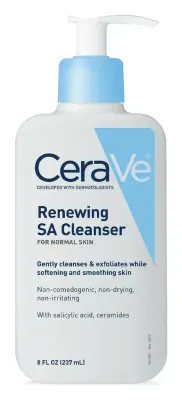
Why it fits: A fragrance-free salicylic acid cleanser for normal and acne-prone skin that CeraVe makes for face and body.
Manufacturer source · checked 2026-10-23
Heavy coverage earns its place: covering a tattoo for a wedding, evening out legs for a dress, hiding a scar you’d rather not discuss, or painting your whole body for a costume. But if you’ve noticed small bumps showing up exactly where that makeup sits, you’re not imagining the connection.
Full-coverage and body makeup can contribute to clogged pores. Coverage itself isn’t the problem, though. It’s a mix of which ingredients your skin reacts to, how long the makeup stays on, what it’s trapped under, and how well it comes off.
Can heavy makeup really clog pores?
Yes. The American Academy of Dermatology (AAD) calls acne caused by cosmetics acne cosmetica. It typically shows up as many tiny bumps, often whiteheads that rise slightly above the skin, plus some pimples, where the product is worn. Foundation, concealer and blush can all cause it.
Two details make it easy to miss:
- It’s slow. The AAD says blemishes can take anywhere from a few days to six months to appear after you start a product.
- It clears when the cause is gone. Acne cosmetica tends to clear once you stop the product causing it, but expect weeks, not days.
There’s no study showing “full coverage” as a category clogs pores more than sheer makeup. What changes with heavy makeup is everything around the formula: more product per square inch, longer wear, harder removal and, on the body, clothes on top.
Why does full-coverage and body makeup cause more trouble?
Thicker layers stay on longer
Full-coverage, long-wear and transfer-proof formulas are designed to grip the skin and resist water, sweat and rubbing. That’s what makes them good at their job, and it’s also why a splash of water and a quick wash at night often leave some behind. The AAD is clear that even non-comedogenic makeup can cause acne if you sleep in it.
Sweat and friction under clothing
Body makeup usually ends up under something: a waistband, a bra strap, a costume, a backpack. The AAD’s back acne advice says anything that rubs against your skin can make body acne flare, and to shower and change out of sweaty clothes as soon as you can. Acne triggered by heat, sweat, pressure and friction is called acne mechanica; see our guide to maskne and acne mechanica.
Makeup worn under tight clothing combines both: a layer of product plus heat, sweat and rubbing on top of it.
Body skin breaks out too
The back and chest are common places for acne, and the AAD’s advice for them includes using oil-free skin care products and cosmetics there, just as on the face. If you’re already prone to breakouts on your back, chest or shoulders, start with our body acne routine.
Fungal acne likes the same conditions
Heat, sweating and occlusion are also triggers for fungal acne (Malassezia folliculitis), which shows up as itchy, uniform bumps, often on the chest, back and upper arms. It looks like acne but needs different treatment, so if your “makeup breakout” itches and every bump is the same size, read about fungal acne before swapping products.
Skin Realist check: body makeup under a tight dress for eight hours of dancing is basically a sweat-and-friction experiment with a pigment layer added. The formula is only one of the variables.
Which ingredients are worth a second look?
Comedogenicity (“pore-clogging”) data mostly comes from rabbit-ear tests from the 1970s and 1980s. Mills and Kligman (1982) found rabbit skin is more sensitive than human skin: substances only weakly positive in rabbits were probably fine for most people, with the possible exception of people who are acne-prone.
With that caveat, the results are still a reasonable guide:
- Some fatty esters keep showing up. Fulton et al. (1984) flagged isopropyl myristate and related esters, and a 2007 re-test found isopropyl myristate, isopropyl palmitate and isopropyl isostearate among the positives.
- Some feared ingredients tested fine. In that same re-test, petrolatum, paraffin, cetyl alcohol and stearyl alcohol were not comedogenic.
- The finished product is what matters. An ingredient’s rating doesn’t tell you how a whole formula behaves at its concentration on your skin.
For the full picture, including why online “comedogenic checkers” disagree, see comedogenic ingredients and ingredient checkers.
What that looks like on real labels
Two heavy-coverage products from our catalog show how to read a label without overreacting:
Dermablend Leg and Body Makeup is a satin-finish body foundation Dermablend positions for transfer-resistant coverage of scars, tattoos and veins, sold as fragrance free. Its list is built mostly on water, silicones such as cyclopentasiloxane and dimethicone, and isododecane, with isononyl isononanoate high up. It also lists alcohol denat. It doesn’t list the isopropyl esters above. That doesn’t make it pore-proof; it means its label doesn’t raise the flags the old studies did.
Dermablend Cover Creme is a high-coverage cream foundation for tattoos, scars and other marks, also sold as fragrance free. It’s a classic heavy cream: mineral oil first, then corn starch, synthetic beeswax and kaolin, with isopropyl palmitate sixth and several waxes. If you’re breakout-prone, that isopropyl palmitate is worth knowing about, so keep it to the areas that need it and test it on a small patch for a couple of weeks first.
→ See Dermablend Cover Creme on Amazon
For more heavy-coverage options, browse full-coverage foundations, and for tattoo-specific tips see how to cover a tattoo with makeup.
How do you wear heavy coverage without breaking out?
- Check every layer. The AAD recommends products labeled “oil-free”, “non-comedogenic” or “won’t clog pores”, including the primer, sunscreen and moisturizer underneath.
- Cover only what needs covering. Spot-conceal a tattoo or scar instead of a full layer over the whole limb or face when you can.
- Build thin layers. Several thin coats are easier to remove fully than one thick one.
- Introduce one product at a time. Because breakouts can take weeks to appear, adding several new products at once makes it impossible to tell which one did it.
- Keep tools clean and personal. The AAD recommends cleaning brushes every week and not sharing them.
- Plan around sweat. If you’ll be dancing, performing or outdoors, remove the makeup and shower as soon as you’re done, or at least wipe with an oil-free cleansing wipe and change out of sweaty clothes.
How should you remove full-coverage and body makeup?
Long-wear makeup needs a remover that dissolves it before you wash, so you don’t have to scrub. The AAD warns that scrubbing irritates skin and can make acne flare.
On the face: dissolve first, then wash once.
CeraVe Hydrating Micellar Water is a fragrance-free, no-rinse micellar water with ceramides and niacinamide that CeraVe says removes makeup, including around the eyes. Hold a soaked pad on heavier areas for a few seconds so the makeup lifts. Then wash with a gentle cleanser such as Laneige Water Bank Gentle Gel Cleanser, a pH-balanced gel sold as fragrance free and made to remove sunscreen and makeup.
More on the two-step method in how to double cleanse without overwashing.
On the body: shower the same day, and use your hands or a soft cloth rather than a rough scrub. If you’re prone to body breakouts, CeraVe Renewing SA Cleanser is a fragrance-free salicylic acid cleanser CeraVe makes for normal and acne-prone skin on the face and body, with ceramides and niacinamide. Salicylic acid is one of the over-the-counter acne ingredients the AAD mentions. Let it sit for a moment before rinsing, and cut back if your skin feels dry or tight. If you’re pregnant or breastfeeding, ask your doctor or pharmacist before using salicylic acid products; see our pregnancy skincare guide.
→ See CeraVe Renewing SA Cleanser on Amazon
Wash anything that touched the makeup, such as straps, collars and costume pieces, before you wear them again.
Skin Realist check: transfer-proof means it won’t come off on your shirt. It doesn’t mean it will come off in the shower, so plan the removal when you plan the look.
Mistakes to avoid
- Sleeping in body or full-coverage makeup. The AAD says even non-comedogenic makeup can cause acne if you sleep in it.
- Scrubbing it off. Dissolve it with a remover first instead.
- Blaming the newest product. Acne cosmetica can take months to appear, so the culprit may be something you started a while ago.
- Covering breakouts with more of the same product. If one product seems to cause bumps, stop it rather than layering it over them.
- Assuming every body bump is acne. Itchy, uniform bumps may be fungal acne.
The bottom line
Full-coverage and body makeup doesn’t have to mean breakouts. Look for non-comedogenic or oil-free labels, keep heavy coverage to the areas and hours you need it, don’t let it sit under sweaty, rubbing clothes for longer than necessary, and take all of it off the same day. If you only add one thing, make it a proper remover such as CeraVe Hydrating Micellar Water for the face and a same-day shower for the body.
Wearing heavy makeup for a costume? Our Halloween makeup and face paint skin guide covers patch testing, face paint rules and getting glitter off.
If breakouts don’t improve after six to eight weeks of changes, the AAD recommends seeing a dermatologist.
Common questions
Does full-coverage foundation clog pores more than light foundation?
Not automatically. Whether makeup clogs pores depends on its ingredients and your skin, not how much it covers. Heavy coverage is often thicker and longer-wearing, though, which makes it harder to remove completely, and the AAD says even non-comedogenic makeup can cause acne if you sleep in it.
Can body makeup cause body acne?
It can contribute. Acne is common on the back and chest, and the AAD says anything that rubs against the skin and sweat left on it can make body acne flare. Makeup under tight clothing, straps or costumes adds both. Shower it off the same day.
How do I know if my makeup is clogging my pores?
The AAD describes acne cosmetica as many tiny bumps, often whiteheads, where you wear the product. It can appear anywhere from a few days to six months after you start a product, so stop one suspect product at a time and watch for several weeks.
Is long-wear or transfer-proof makeup bad for acne?
Not necessarily, but formulas built to resist water, sweat and rubbing also resist water and a quick wash at night. Plan to remove them with an oil cleanser or micellar water first, then a gentle cleanser, rather than scrubbing.
Which makeup ingredients are most likely to clog pores?
In rabbit-ear tests, some fatty esters such as isopropyl myristate and isopropyl palmitate were among the most consistent positives, while petrolatum, paraffin and fatty alcohols such as cetyl alcohol were not. Rabbit skin is more sensitive than human skin, so treat these lists as a guide, not a verdict.