CeraVe Resurfacing vs Renewing Retinol
Should I choose CeraVe Resurfacing Retinol Serum or Skin Renewing Retinol Serum?
Short answer
Choose Resurfacing Retinol Serum if your main concern is post-acne marks, visible pores and uneven texture; it adds licorice root extract. Choose Skin Renewing Retinol Serum if your main concern is fine lines and wrinkles; it adds hyaluronic acid. Both use encapsulated retinol with niacinamide and ceramides, are free of added fragrance, don't state a retinol percentage and are for night use.
What this means for you
Start with what you notice
If you want to start retinol and can't tell these two apart, decide by your main concern: marks left by breakouts, or fine lines.
The ingredient names, translated
Retinol is a vitamin A derivative that helps skin renew itself. Both serums use encapsulated retinol, which releases more gradually, and add niacinamide and ceramides. CeraVe positions Resurfacing for post-acne marks and pores and Skin Renewing for signs of aging. Neither label gives a retinol percentage, so you can't compare strength from the box.
How to decide
- Marks after breakouts, pores, uneven texture? Resurfacing Retinol Serum.
- Fine lines, wrinkles, dullness? Skin Renewing Retinol Serum.
- New to retinol? Start a few nights a week with either, and wear sunscreen daily.
- Pregnant or planning to be? Ask your doctor before using retinoids.
What to expect
Retinol takes weeks to months to show changes, and dryness or tingling early on is common. We haven't tested either product.
General guidance, not a test of these products: AAD: retinoids and retinol (start slowly, use sunscreen); AAD: acne scars and dark spots. Each product's label source is linked on its product page.
| Product | Size | Key ingredients | Skin type (brand) | Fragrance | Worth knowing | Source |
|---|---|---|---|---|---|---|
| Brand doesn't list it | Brand doesn't name one | oily, combination, normal skin | Marketed as fragrance free | Alcohol, Isopropyl Myristate | Brand's page Checked | |
| Brand doesn't list it | Brand doesn't name one | oily, dry, combination, sensitive, normal skin | Marketed as fragrance free | Alcohol | Brand's page Checked |
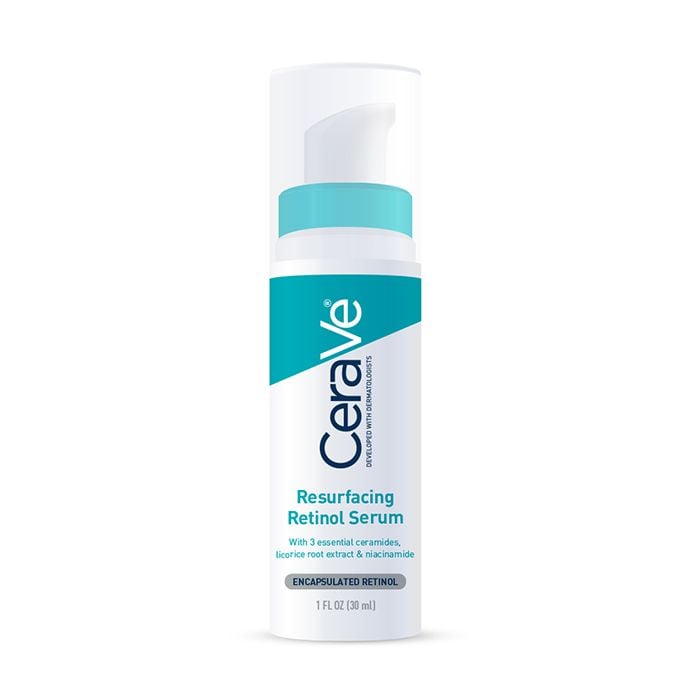
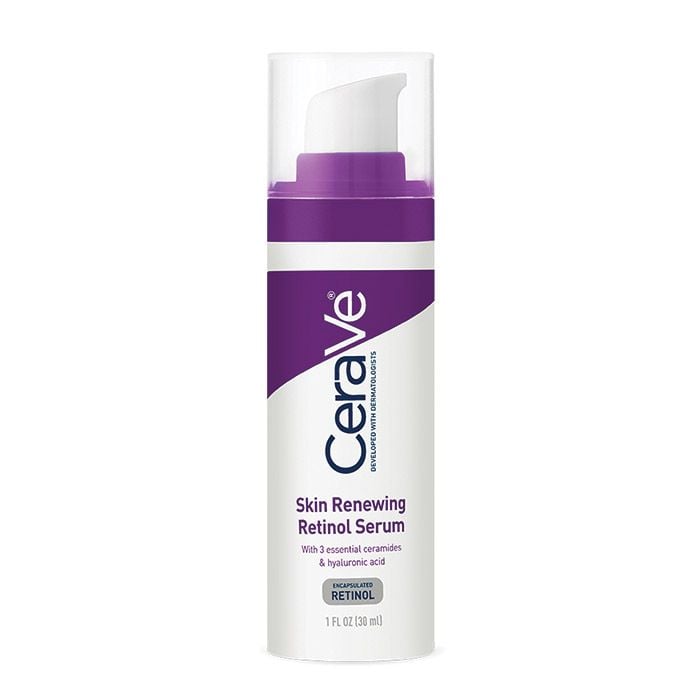
Concern decides it
CeraVe Resurfacing Retinol Serum is positioned for post-acne skin: marks left by breakouts, visible pores, uneven tone and texture. It has encapsulated retinol, licorice root extract (included to brighten), niacinamide and three ceramides. CeraVe says it’s paraben free and free of added fragrance.
CeraVe Skin Renewing Retinol Serum is positioned for signs of aging: fine lines, wrinkles, texture and radiance. It has encapsulated retinol, hyaluronic acid, niacinamide and ceramides, and is free of added fragrance.
Neither states a retinol percentage, so the labels don’t let you compare strength. Both are for night use, and CeraVe says to use sunscreen during the day.
Starting either one
The AAD advises starting retinoids slowly. Apply a small amount at night after cleansing a few times a week, then build up. Avoid the eyes and lips, and expect some dryness at first. For marks that don’t fade, the AAD’s guide to acne scars explains what a dermatologist can do.
Manufacturer sources
Sources and label-check dates are recorded on the product pages.
Which is best for you?
CeraVe Resurfacing Retinol Serum
Best if your main concern is post-acne marks, visible pores or uneven texture.
Also consider it when
- You want a retinol serum that also lists licorice root extract
Worth knowing
- Sensitivity considerations: Isopropyl Myristate
CeraVe Skin Renewing Retinol Serum
Best if your main concern is fine lines, wrinkles or dullness.
Also consider it when
- You want a retinol serum that also lists hyaluronic acid
Common questions
Which CeraVe retinol serum is stronger?
CeraVe doesn't state the retinol percentage for either, so the labels don't tell you which is stronger.
Can I use either every night?
CeraVe suggests working up to nightly use. Start a few nights a week and increase as your skin tolerates it.
Do I need sunscreen with retinol?
Yes. CeraVe advises sunscreen while using both, and the AAD recommends daily sun protection with retinoids.