Sunday Riley A+ vs Luna Sleeping Night Oil
Should I choose Sunday Riley A+ High-Dose Retinoid Serum or Luna Sleeping Night Oil?
Short answer
Choose A+ High-Dose Retinoid Serum if you want a serum with two retinoids (retinol and hydroxypinacolone retinoate) and no essential oils on the label. Choose Luna Sleeping Night Oil if your skin is dry and you want a retinoid in a face oil, and you're fine with blue tansy, chamomile and citrus oils. Both are night products; start slowly and wear sunscreen by day.
What this means for you
Start with what you notice
Both are evening retinoid products for fine lines and texture. The choice is serum or oil, and whether you want essential oils on your face.
The ingredient names, translated
Retinoids are vitamin A ingredients that speed up skin cell turnover. A+ pairs encapsulated retinol with hydroxypinacolone retinoate in a water-based serum. Luna uses hydroxypinacolone retinoate in a blend of plant oils, including several essential oils that give it scent and its blue color.
How to decide
- Want a serum and no essential oils? A+ High-Dose Retinoid Serum.
- Dry skin and you like a face oil? Luna Sleeping Night Oil.
- Pregnant, trying to conceive or breastfeeding? Ask your doctor or pharmacist before using either.
What to expect
Retinoid results build over months. Both can cause dryness or irritation at first, so start a few nights a week. We haven't tested either product.
General guidance, not a test of these products: AAD: retinoid or retinol?; FDA: fragrances in cosmetics. Each product's label source is linked on its product page.
| Product | Size | Key ingredients | Skin type (brand) | Fragrance | Worth knowing | Source |
|---|---|---|---|---|---|---|
| 30 ml | Retinol + Hydroxypinacolone Retinoate | Brand doesn't say | Marketed as fragrance free | Alcohol | Brand's page Checked | |
| 35 ml | Hydroxypinacolone Retinoate | Brand doesn't say | Marketed fragrance free; scent ingredients flagged | Citrus Aurantium Amara (Bitter Orange) Flower Oil, Citrus Aurantium Dulcis (Orange) Oil, Chamomilla Recutita (Matricaria) Flower Oil, Cananga Odorata (Ylang Ylang) Flower Oil, Vetiveria Zizanoides Root Oil, Anthemis Nobilis (Chamomile) Flower Oil, Tanacetum Annuum (Blue Tansy) Flower Oil, Eriocephalus Punctulatus (Cape Chamomile) Flower Oil | Brand's page Checked |
Serum or oil, scented or not
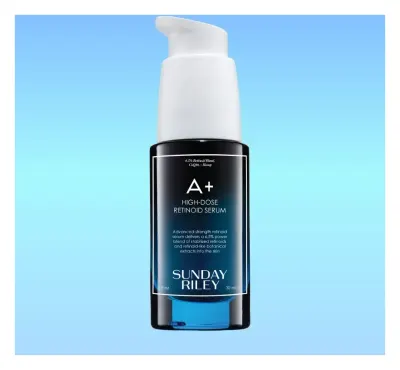
Sunday Riley A+ High-Dose Retinoid Serum is a 30 mL serum with hydroxypinacolone retinoate and encapsulated retinol. It also lists honey extract, prickly pear, bisabolol, shea butter and blue-green algae. Sunday Riley sells it as fragrance free, and the label lists no essential oils.
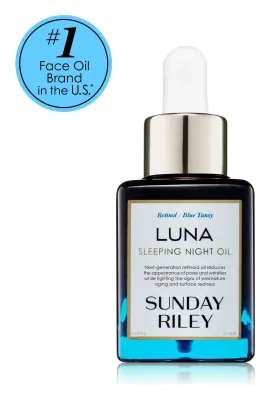
Sunday Riley Luna Sleeping Night Oil is a 35 mL blue face oil. It leads with grape seed, blackberry seed, chia seed and avocado oils, then lists hydroxypinacolone retinoate and a run of essential oils including blue tansy and chamomile. Sunday Riley says to massage it in until the blue turns clear.
Skin Realist check: pretty blue oil, real retinoid. Treat it with the same patience as any other vitamin A product.
Label differences worth knowing
Luna’s list includes several citrus oils and ylang ylang, which matters if scented botanicals irritate you. Sunday Riley says not to use Luna during pregnancy. For pregnancy cautions on retinoids, see our pregnancy skincare guide. For more, see retinoids compared and moisturizer for retinol peeling.
Manufacturer sources
Sources and label-check dates are recorded on the product pages.
Which is best for you?
Sunday Riley A+ High-Dose Retinoid Serum
Best if you want two retinoids in a serum.
Also consider it when
- You want a label with no essential oils
Sunday Riley Luna Sleeping Night Oil
Best if your skin is dry and you prefer a face oil at night.
Also consider it when
- You're comfortable with blue tansy, chamomile and citrus oils
Worth knowing
- Scent ingredients on the label: Citrus Aurantium Amara (Bitter Orange) Flower Oil, Citrus Aurantium Dulcis (Orange) Oil, Chamomilla Recutita (Matricaria) Flower Oil and 5 more
Common questions
Which retinoids does each contain?
A+ lists hydroxypinacolone retinoate and retinol. Luna lists hydroxypinacolone retinoate.
Does Luna contain essential oils?
Yes. Its list includes bitter orange flower, orange, chamomile, ylang ylang, vetiver, blue tansy and Cape chamomile oils. A+ lists none.
Can I use them together?
Sunday Riley suggests applying a few drops of oil before A+ for sensitive skin. Stacking two retinoid products raises the risk of irritation, so most people use one.